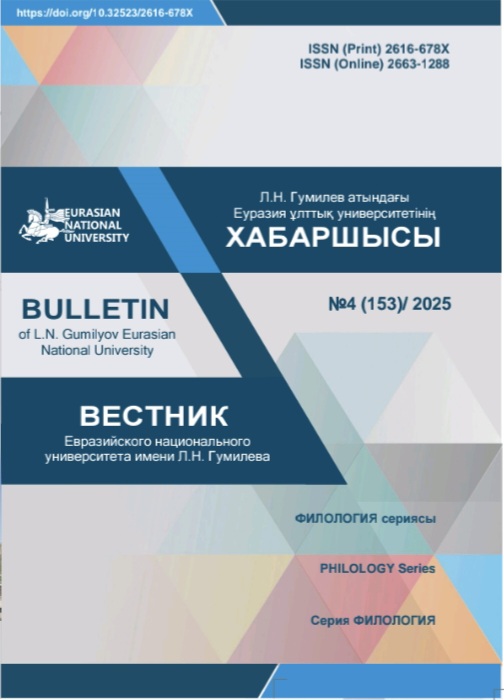
Анатолий Ким шығармаларындағы полифониялық поэтика: семантикасы мен функциялары
Қаралымдар: 351 / PDF жүктеулері: 188
DOI:
https://doi.org/10.32523/2616-678X-2025-153-4-179-190Кілт сөздер:
А. Ким, полифония, сөйлеудің өзгеруі, абсурд поэтикасы, психоаналитикалық әдебиеттануАңдатпа
Бұл мақаланың мақсаты – А. Ким прозасындағы полифония құбылысын зерттеу. Ол, ең алдымен, сөйлеу перверсияларында (ауытқуларында) көрініс табатын, шығарма поэтикасының түрлі деңгейлерінде байқалады. Осы мақалада талдаудың негізгі нысаны болып табылатын «Жұмақ қуанышы» романындағы оқиға желісінің негізі үнділік философиялық-діни дәстүрлер – жанның қоныс аударуы, яғни «сансара» ұғымына негізделген. Бұл көшіп-қону үдерісінің соңында жан кемелдікке жетуге тиіс. Басты кейіпкердің жаны өз мақсатына жететін бейнеге енеді және енді жер бетінде «жұмақ қуанышын» іздеп сенделмейді. А. Кимнің романында бұл үйлесімге қол жеткізу жазушы-қаһарманның тілдік дисгармониясынан бас тарту, сөйлеу лейтмотивіндегі «схизистік» (екіге жарылу) қайшылықты жою арқылы көрініс табады. «Тиін» және «Кентаврлар қонысы» атты шығармаларындағы схизис, сондай-ақ сөйлеу мен бейне жүйесіндегі абсурдистік үрдістер – Ким прозасындағы полифониялық дауыстардың, кейіпкерлердің түрленуінің, қаһарманның «төртке бөлінуінің», анимизмнің, түрлі деңгейдегі неологизмдердің, кең метафоралық ассоциациялар қатарларының, синонимдік лексикалық және синтаксистік құрылымдардың, бір-біріне қарама-қарсы элементтерді біріктіруінің нәтижесі болып табылады. А. Кимнің «Тиін», «Жұмақ қуанышы» романдары мен «Кентаврлар қонысы» повесінің полифониялық құрылымын талдау үшін компаративистика, герменевтика, психоанализ және когнитивтік әдебиеттану сияқты пәнаралық әдістер қолданылды.
Жүктеулер
Жарияланды
Дәйексөзді қалай келтіруге болады
Журналдың саны
Бөлім
Лицензия
«Л.Н. Гумилев атындағы Еуразия ұлттық университетінің Хабаршысы. Филология сериясы» ғылыми журналы жарияланған материалдарға ашық қолжетімділік (Open Access) саясатын ұстанады. Журнал редакциясы ғылыми білімді еркін және тең дәрежеде тарату қағидатына негізделе отырып, зерттеу нәтижелеріне ашық қолжетімділік филология ғылымының дамуына, академиялық коммуникацияның нығаюына және отандық зерттеулердің халықаралық ғылыми кеңістікке ықпалдасуына ықпал етеді деп есептейді.
1. Еркін және тегін қолжетімділік
Журналда жарияланған барлық мақалалар басылымның ресми сайтында ашық қолжетімді түрде орналастырылады және барлық пайдаланушылар үшін шектеусіз, тіркеусіз және ақысыз қолжетімді.
Пайдаланушылардың құқықтары:
-
материалдарды еркін оқу және жүктеп алу;
-
жарияланым мәтіндерін көшіру және тарату;
-
мақалаларды басып шығару;
-
авторын және жарияланған дереккөзін міндетті түрде көрсете отырып, материалдарды ғылыми және білім беру мақсаттарында пайдалану.
2. Лицензиялау
Журнал материалдары Creative Commons Attribution-NonCommercial 4.0 International (CC BY-NC 4.0) лицензиясы негізінде таратылады:
https://creativecommons.org/licenses/by-nc/4.0/
Аталған лицензия авторлықты және түпнұсқа жарияланымға сілтемені міндетті түрде көрсете отырып, материалдарды коммерциялық емес мақсатта пайдалану, көшіру, тарату және бейімдеу құқығын береді.
3. Ашық қолжетімділіктің артықшылықтары
Ашық қолжетімділік саясаты мыналарды қамтамасыз етеді:
-
ғылыми жарияланымдардың көрінуі мен дәйексөзделу деңгейінің артуын;
-
филология, тіл білімі, әдебиеттану және аударматану салаларындағы зерттеу нәтижелерінің жедел таралуын;
-
халықаралық ғылыми ынтымақтастықтың кеңеюін;
-
оқырмандардың қаржылық және техникалық кедергілерсіз өзекті ғылыми ақпаратқа қол жеткізуін.
Журнал редакциясы редакциялық үдерістердің ашықтығын, рецензиялау сапасының жоғары деңгейін және филологиялық зерттеулер саласындағы ғылыми нәтижелердің кең қолжетімділігін қамтамасыз етуге ұмтылады.