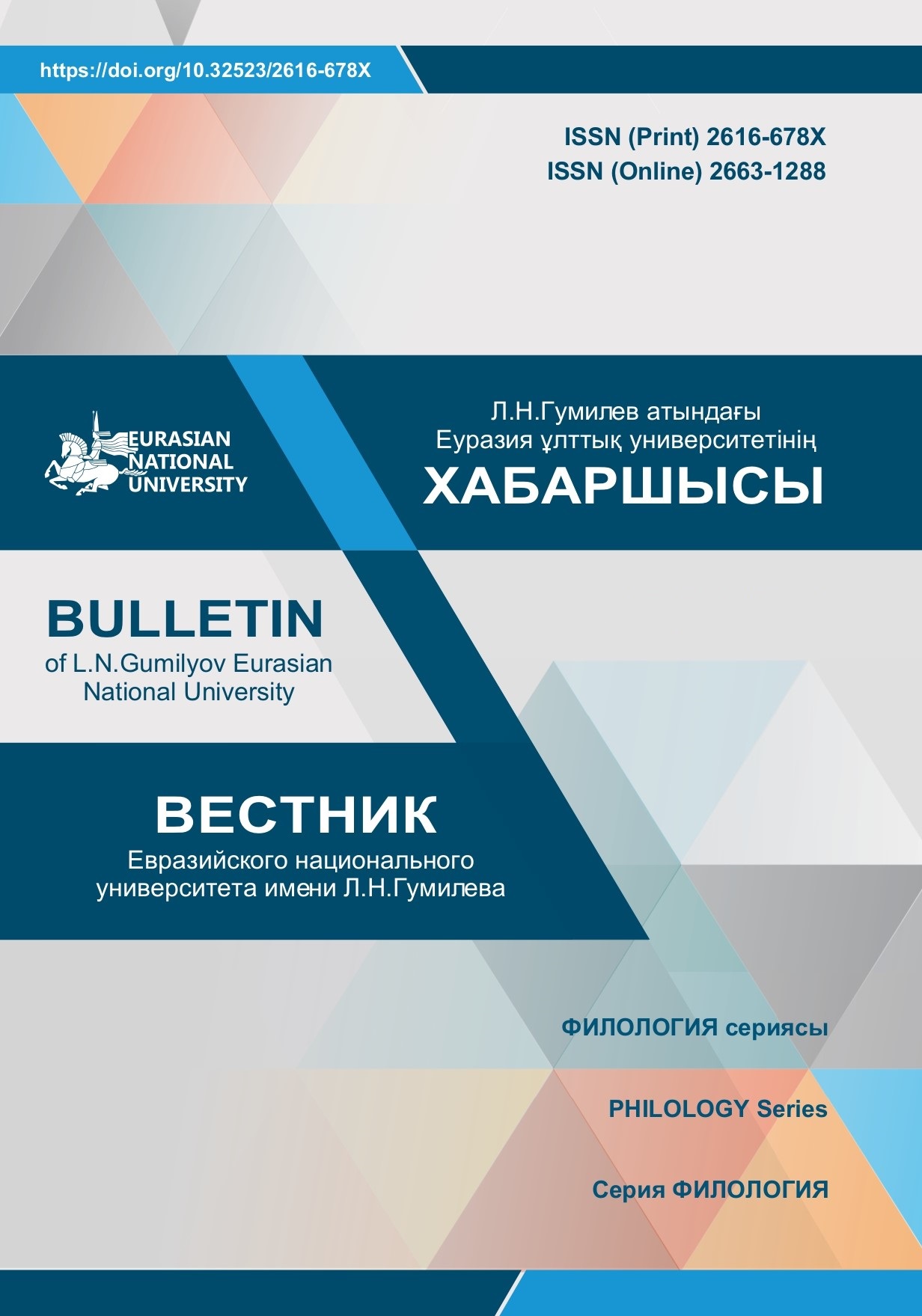
Японская классическая литература в глобальном контексте (на материале «Повести о Гэндзи»)
Просмотры: 352 / Загрузок PDF: 183
DOI:
https://doi.org/10.32523/2616-678X-2020-131-2-16-21Ключевые слова:
японская классическая литература, «Повесть о Гэндзи», перевод, литературные жанры и подходыАннотация
Основная проблематика изучения классической японской литературы в
глобальном аспекте, безусловно, связана с переводом. В этой статье на примере оригинального текста «Повести о Гэндзи» и его переводов на английский и русский языки рассматривается специфическое построение предложения в старо-японском языке, в котором не
указываются подлежащее, а также слова и выражения, аналогов которым нет в европейских
языках.Также рассматриваются особенности методологии исследования литературы, обусловленные различием в научных подходах японского и европейского научных миров
Загрузки
Опубликован
Как цитировать
Выпуск
Раздел
Лицензия
Научный журнал «Вестник Евразийского национального университета имени Л.Н. Гумилева. Серия: Филология» придерживается политики открытого доступа (Open Access) к опубликованным материалам, основываясь на принципе свободного и равного распространения научных знаний. Редакция исходит из того, что открытый доступ к результатам исследований способствует развитию филологической науки, укреплению академической коммуникации и интеграции отечественных исследований в международное научное пространство.
1. Свободный и бесплатный доступ
Все статьи, опубликованные в журнале, размещаются в открытом доступе на официальном сайте издания и доступны всем пользователям без ограничений, регистрации и оплаты.
Пользователи имеют право:
-
свободно читать и скачивать материалы;
-
копировать и распространять тексты публикаций;
-
распечатывать статьи;
-
использовать материалы в научных и образовательных целях с обязательным указанием авторства и источника публикации.
2. Лицензирование
Материалы журнала распространяются на условиях лицензии Creative Commons Attribution-NonCommercial 4.0 International (CC BY-NC 4.0)
https://creativecommons.org/licenses/by-nc/4.0/
Данная лицензия разрешает использование, копирование, распространение и адаптацию материалов в некоммерческих целях при обязательном указании авторства и ссылки на оригинальный источник публикации.
3. Преимущества открытого доступа
Политика открытого доступа обеспечивает:
-
повышение видимости и цитируемости научных публикаций;
-
оперативное распространение результатов исследований в области филологии, лингвистики, литературоведения и переводоведения;
-
расширение международного научного сотрудничества;
-
доступ читателей к актуальным научным данным без финансовых и технических барьеров.
Редакция журнала стремится обеспечить прозрачность редакционных процессов, высокое качество рецензирования и широкую доступность научных результатов в сфере филологических исследований.