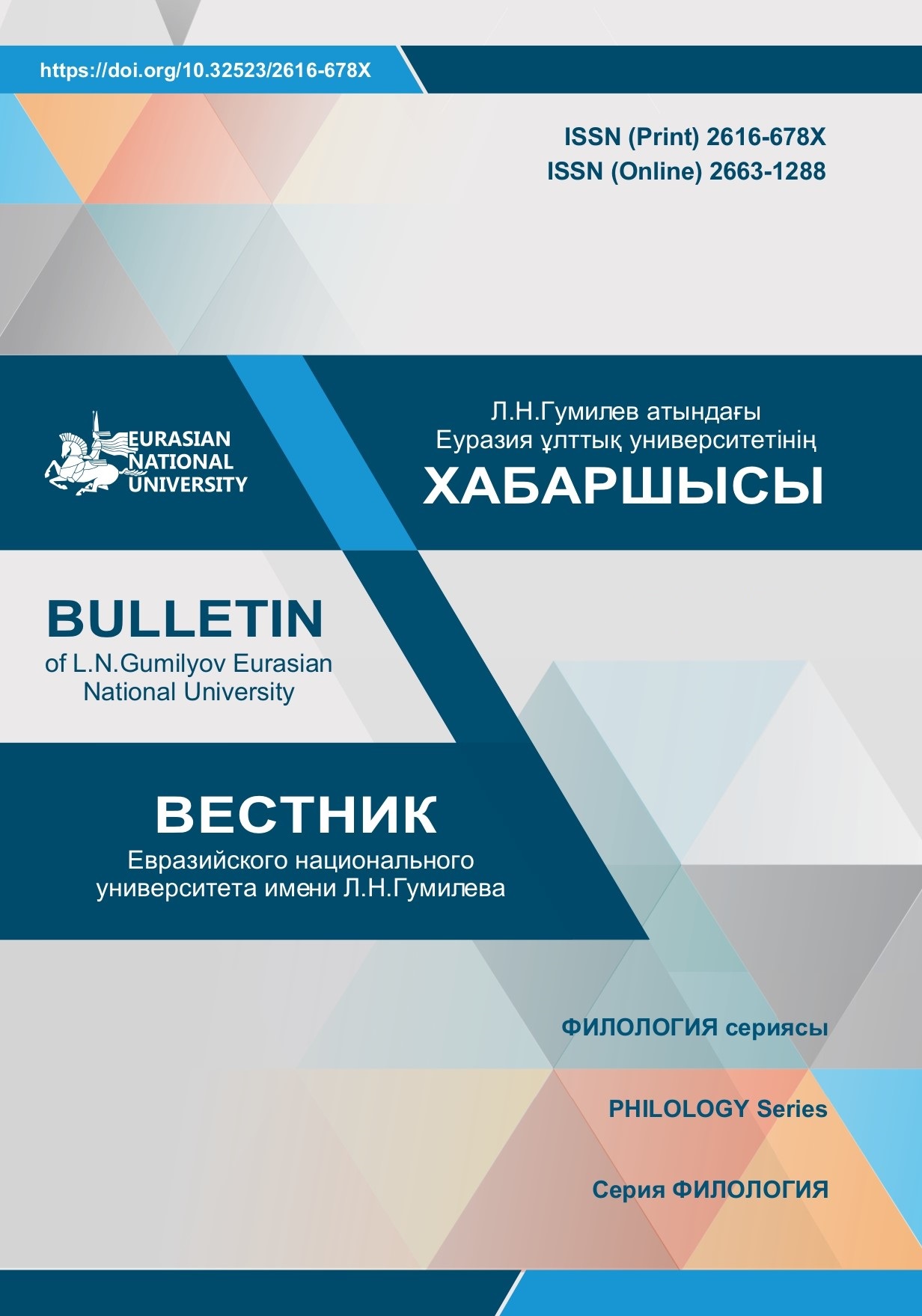
Pragmatics of television discourse
Views: 337 / PDF downloads: 315
Keywords:
television discourse, pragmatics, morning programs, anthropocentric paradigm, communication, consciousness, cognitionAbstract
The article is devoted to the recognition of the pragmatic nature of television discourse, and morning programs are studied as a specific object. With the development of scientific and technological progress, social relations become more complicated, the flow of information must be fast, accurate, concise and truthful - the main requirement of the media industry. The discursive nature of the modern media sphere is focused on pragmatic goals within the framework of the addressee-text-addressee trinity. In a research article aimed at recognizing the pragmatic nature of television discourse, the task is to consider a language based on the principles of the anthropocentric paradigm, in general, on the basis of the world of human consciousness and cognition, spiritual values. The research article was aimed at identifying innovations in the format of morning information programs and clarifying their pragmatic goals. When assessing the relationship between the addressee and the addressee, the professional skills of the TV presenter and the level of knowledge of the culture of direct broadcasting, the knowledge and knowledge of the addressee and the addressee, etc., are taken into account when communicating. Theoretically, it is necessary to consider programs in television discourse within the framework of an anthroporelevant paradigm. It is known that the act of speaking on television forms the culture of speech in society, therefore, from a practical point of view, it is valuable to pay attention to the possibilities and use of television and master the culture of the screen. That is why it is very important to consider language as a whole, based on human consciousness and knowledge, spiritual values and peace.
Downloads
Published
How to Cite
Issue
Section
License
Here is the academic English version suitable for publication on the journal website:
The academic journal “Bulletin of L.N. Gumilyov Eurasian National University. Philology Series” adheres to an Open Access policy for all published materials, based on the principle of free and equitable dissemination of scholarly knowledge. The Editorial Board believes that open access to research results contributes to the advancement of philological science, strengthens academic communication, and promotes the integration of national research into the international scientific community.
1. Free and Open Access
All articles published in the journal are made openly available on the official website of the journal and are accessible to all users without restrictions, registration, or payment.
Users are entitled to:
-
freely read and download materials;
-
copy and distribute the texts of publications;
-
print articles;
-
use materials for scientific and educational purposes, provided that proper attribution is given to the author(s) and the original source of publication.
2. Licensing
Journal materials are distributed under the terms of the Creative Commons Attribution-NonCommercial 4.0 International (CC BY-NC 4.0) license:
https://creativecommons.org/licenses/by-nc/4.0/
This license permits the use, copying, distribution, and adaptation of the materials for non-commercial purposes, provided that appropriate credit is given to the author(s) and a link to the original publication is included.
3. Benefits of Open Access
The Open Access policy ensures:
-
increased visibility and citation of scholarly publications;
-
prompt dissemination of research findings in the fields of philology, linguistics, literary studies, and translation studies;
-
expansion of international academic cooperation;
-
access for readers to up-to-date scientific information without financial or technical barriers.
The Editorial Board is committed to ensuring transparency in editorial processes, maintaining high standards of peer review, and providing broad accessibility to research outcomes in the field of philological studies.