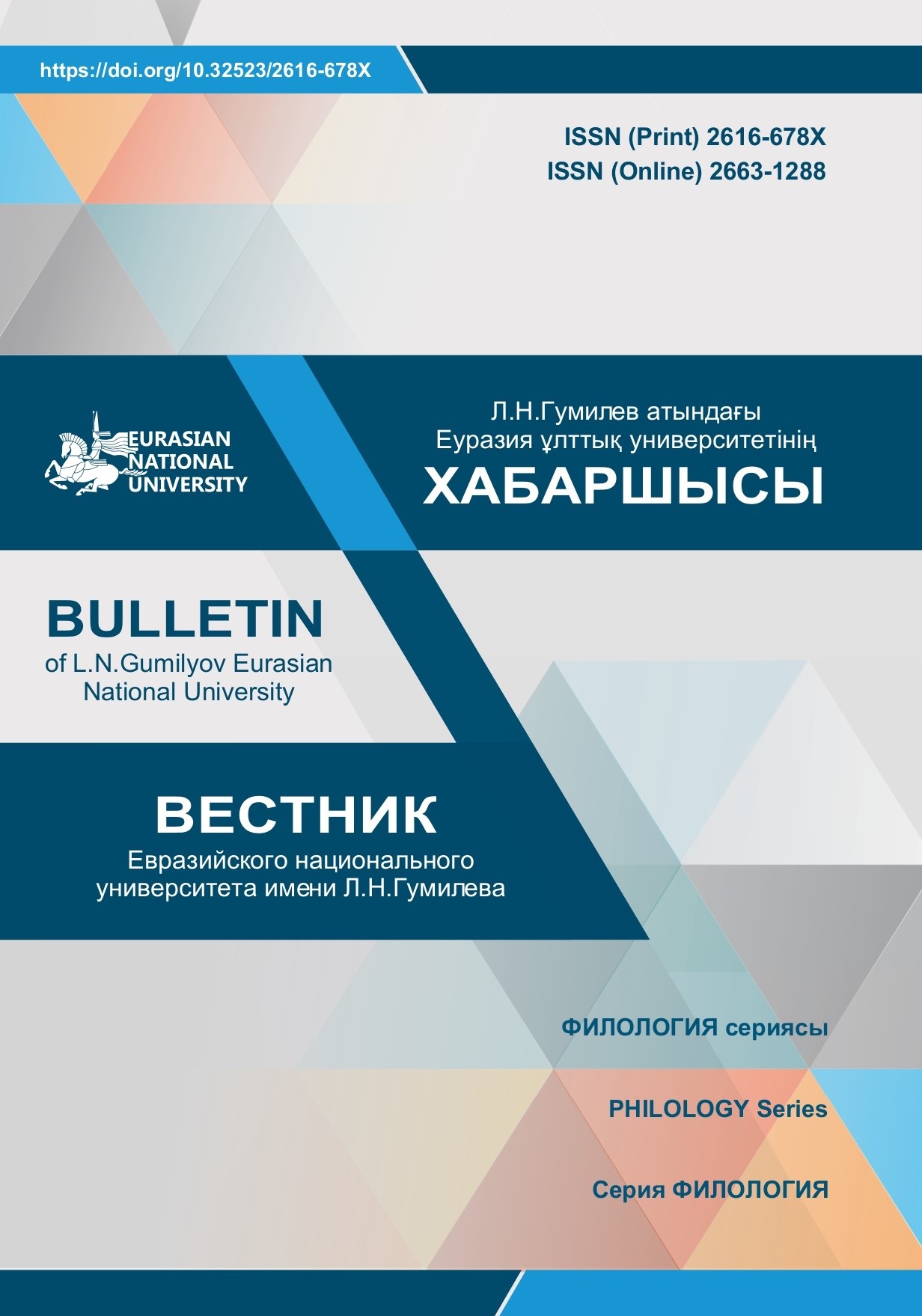
Types and functional field of linguistic mediation
Views: 316 / PDF downloads: 237
DOI:
https://doi.org/10.32523/2616-678X-2024-147-2-81-96Keywords:
linguistics, communication, speech acts, mediation, interactive mediation, non-interactive mediation.Abstract
This article examines the challenges associated with mediation as a distinct form of language
engagement. Mediation, within the realm of general science, refers to a form of communication that relies on the collaborative efforts of two people. Effective application of mediation in addressing challenges,
disputes, and misinterpretations that arise during communication enhances the communication culture.
The subject is extensively debated among contemporary foreign linguists. Nevertheless, this is novel and has not yet been explored in the field of Kazakh linguistics, therefore making it pertinent in this context. The research work focused on linguistic mediation, providing an explanation of the concept of «mediation» and examining its various varieties. By examining instances from daily life and publications, the objective
is to uncover and demonstrate the role of the term in our language. Mediation can manifest as a distinct mode of interpersonal communication, or alternatively, it can assume a non-interactive role, serving just as a means to convey information from the sender to the receiver, devoid of any sort of feedback.
When performing a literature review to uncover the fundamental nature of this term, definitions from both international and domestic scientific sources that refer to mediation are organised and presented in
a methodical manner. The article includes methods such as generalisation, categorization, classification, analysis, and measurement. As previously mentioned, due to the lack of research in domestic linguistics
on this topic, theoretical results and practical explanations from foreign experts are used as a foundation.
Downloads
Published
How to Cite
Issue
Section
License
Here is the academic English version suitable for publication on the journal website:
The academic journal “Bulletin of L.N. Gumilyov Eurasian National University. Philology Series” adheres to an Open Access policy for all published materials, based on the principle of free and equitable dissemination of scholarly knowledge. The Editorial Board believes that open access to research results contributes to the advancement of philological science, strengthens academic communication, and promotes the integration of national research into the international scientific community.
1. Free and Open Access
All articles published in the journal are made openly available on the official website of the journal and are accessible to all users without restrictions, registration, or payment.
Users are entitled to:
-
freely read and download materials;
-
copy and distribute the texts of publications;
-
print articles;
-
use materials for scientific and educational purposes, provided that proper attribution is given to the author(s) and the original source of publication.
2. Licensing
Journal materials are distributed under the terms of the Creative Commons Attribution-NonCommercial 4.0 International (CC BY-NC 4.0) license:
https://creativecommons.org/licenses/by-nc/4.0/
This license permits the use, copying, distribution, and adaptation of the materials for non-commercial purposes, provided that appropriate credit is given to the author(s) and a link to the original publication is included.
3. Benefits of Open Access
The Open Access policy ensures:
-
increased visibility and citation of scholarly publications;
-
prompt dissemination of research findings in the fields of philology, linguistics, literary studies, and translation studies;
-
expansion of international academic cooperation;
-
access for readers to up-to-date scientific information without financial or technical barriers.
The Editorial Board is committed to ensuring transparency in editorial processes, maintaining high standards of peer review, and providing broad accessibility to research outcomes in the field of philological studies.