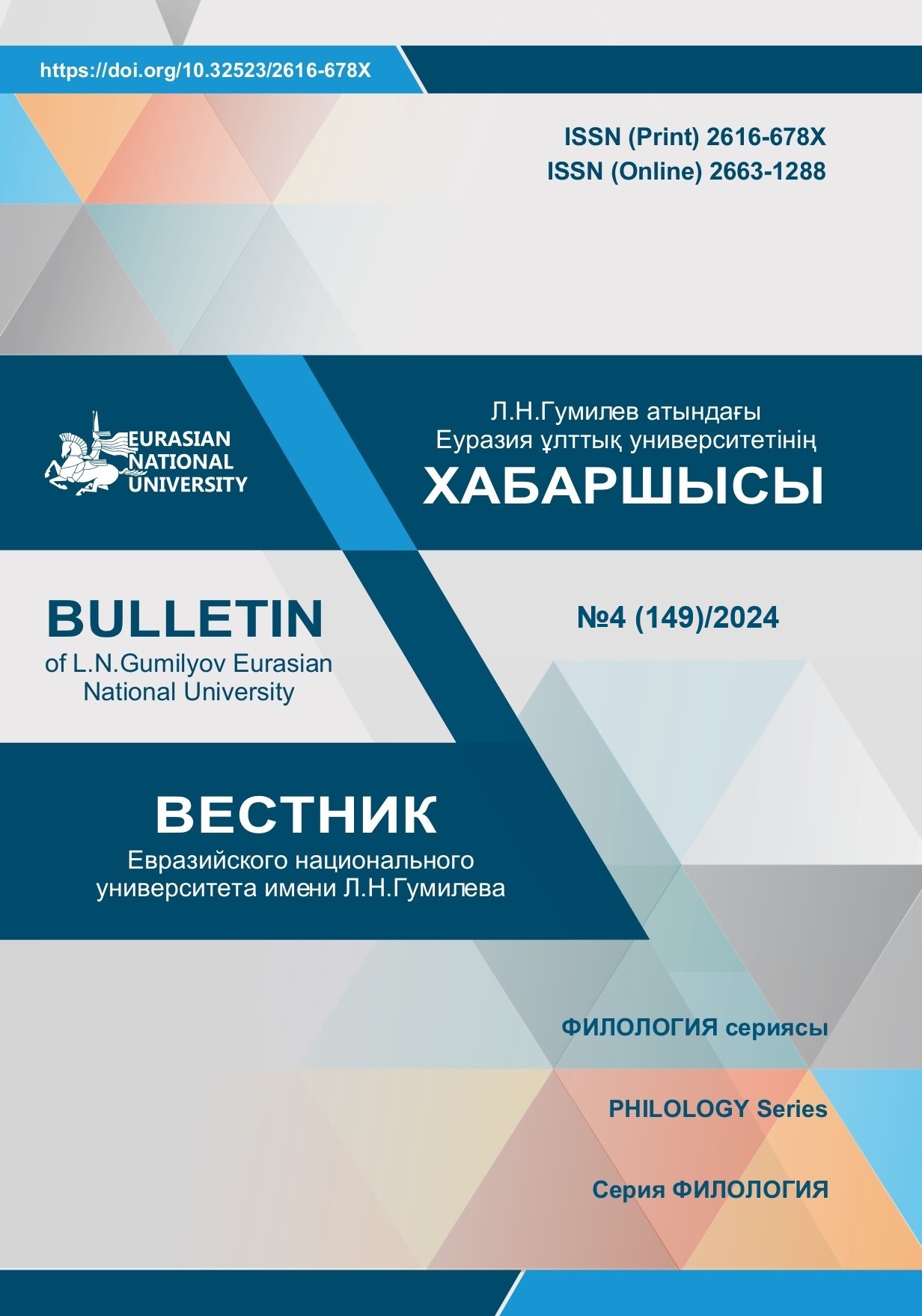
The fate of the Kazakh aul in poetry at the beginning of the 20th century (based on Yessengali Raushanov’s poetry)
Views: 475 / PDF downloads: 370
DOI:
https://doi.org/10.32523/2616-678X-2024-149-4-132-143Keywords:
«the whites» and «the reds», Soviet ideology, Kazakh aul, fate of the people, depictionAbstract
It is obvious that due to the Soviet policy, the Kazakh people were faced with a great disaster, the consequences of which continued for a century. At the beginning of the XX century, the aggressive policy of the Soviet government began to arrest educated and progressive people of the Kazakh nation, raising false accusations with false slander that they were “enemies of the people”, and terrorized the Kazakh steppe, leaving an indelible mark on the minds of people. Such a tragic period in the history of the country became a constant motif of many literary works. There are novels, stories, poems and dramatic works written on this subject. Among these works we can note the poetry of the Kazakh classical poet Essengali Raushanov. The article focuses on the poet’s works and analyzes the description of the fate of the Kazakh auls (village) at the beginning of the XX century in the cycle of poems “Kazakh Aul” and the poem “Aspanga koshyp ketken el” (Country that has moved into the sky). By analyzing these works, the questions about how the fate of the Kazakh country was reflected in this tragic period in the poet’s poetry, and how the poet expressed the sadness and grief of the country were answered. The plight of the Kazakh auls plundered by both the White and Red Armies has been considered in a combination of historical and artistic realities. The methods of comparison, induction and deduction have been used to study the topic. According to the requirements of the study, conclusions have been formulated and drawn.
Downloads
Published
How to Cite
Issue
Section
License
Here is the academic English version suitable for publication on the journal website:
The academic journal “Bulletin of L.N. Gumilyov Eurasian National University. Philology Series” adheres to an Open Access policy for all published materials, based on the principle of free and equitable dissemination of scholarly knowledge. The Editorial Board believes that open access to research results contributes to the advancement of philological science, strengthens academic communication, and promotes the integration of national research into the international scientific community.
1. Free and Open Access
All articles published in the journal are made openly available on the official website of the journal and are accessible to all users without restrictions, registration, or payment.
Users are entitled to:
-
freely read and download materials;
-
copy and distribute the texts of publications;
-
print articles;
-
use materials for scientific and educational purposes, provided that proper attribution is given to the author(s) and the original source of publication.
2. Licensing
Journal materials are distributed under the terms of the Creative Commons Attribution-NonCommercial 4.0 International (CC BY-NC 4.0) license:
https://creativecommons.org/licenses/by-nc/4.0/
This license permits the use, copying, distribution, and adaptation of the materials for non-commercial purposes, provided that appropriate credit is given to the author(s) and a link to the original publication is included.
3. Benefits of Open Access
The Open Access policy ensures:
-
increased visibility and citation of scholarly publications;
-
prompt dissemination of research findings in the fields of philology, linguistics, literary studies, and translation studies;
-
expansion of international academic cooperation;
-
access for readers to up-to-date scientific information without financial or technical barriers.
The Editorial Board is committed to ensuring transparency in editorial processes, maintaining high standards of peer review, and providing broad accessibility to research outcomes in the field of philological studies.