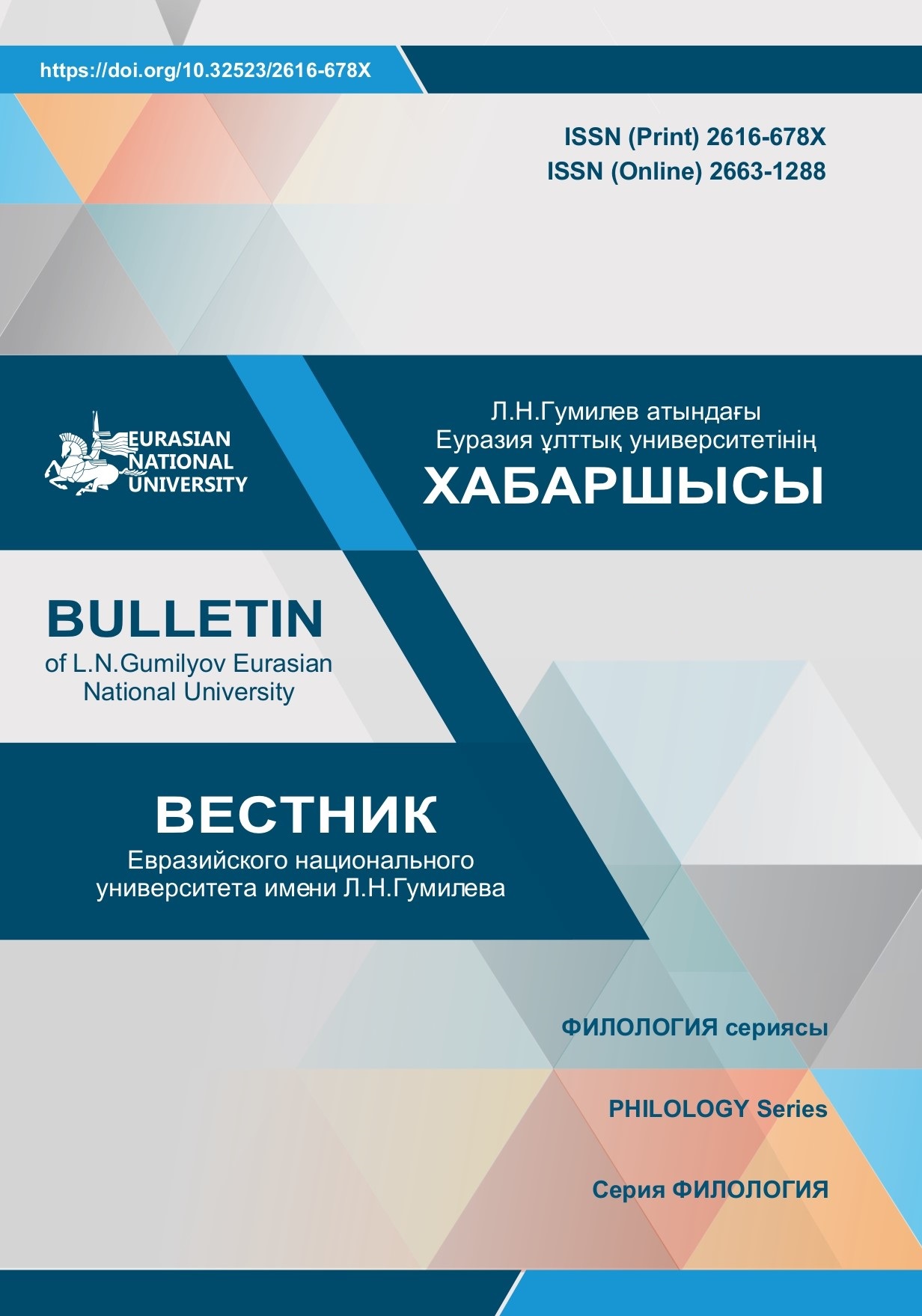
«Jadid» method and the first textbooks of scientists Alash
Views: 679 / PDF downloads: 543
DOI:
https://doi.org/10.32523/2616-678X-2022-139-2-168-176Keywords:
jadidism, new method, Russian Muslims, Alash textbooks, educationAbstract
At the beginning of the 20th century, the «Jadid» method marked the beginning of the Alash movement in the Kazakh land. The basis of the «Jadid» method was laid by the Tatar scientist Ismail Gasprinsky. This method directly influenced the development and strengthening of the culture, education and science of the Muslim people.The elimination of the illiteracy of the people was a common problem not only for the Tatar people, but also for all Russian Muslims of that time. At the end of the 19th and the beginning of the 20th centuries, the movement «Jadidism» (a new method of teaching) also came to Kazakhstan. The founders of «Jadidism» on the Kazakh land were the intelligents of Alash. During the entire adult life of both the Tatar reformer Gasprinsky and the intelligents of Alash had only one priceless noble goal. This is: the formation of a literate and educated generation through the culture of civilized countries with the preservation of the «national value» of the nation. The intelligents of Alash took on all the new good beginnings of I. Gasprinsky, built on the idea of mass enlightenment of the population and the awakening of the nation. And this movement was led by the scientist A. Bokeikhan, whom the intelligents of Alash considered its leader. The intelligents of Alash played a leading role in the development of education-massively educating the population, introducing them to various fields of science. As a result, Alash scientists have written many scientific textbooks, made a great contribution to the development of the culture of the Kazakh people and the development of education. The peculiarity of Alash textbooks was that they easily explained science to their student. And the main goal of the Alash scientists was to educate the educated generation through the textbooks they created.
Downloads
Published
How to Cite
Issue
Section
License
Here is the academic English version suitable for publication on the journal website:
The academic journal “Bulletin of L.N. Gumilyov Eurasian National University. Philology Series” adheres to an Open Access policy for all published materials, based on the principle of free and equitable dissemination of scholarly knowledge. The Editorial Board believes that open access to research results contributes to the advancement of philological science, strengthens academic communication, and promotes the integration of national research into the international scientific community.
1. Free and Open Access
All articles published in the journal are made openly available on the official website of the journal and are accessible to all users without restrictions, registration, or payment.
Users are entitled to:
-
freely read and download materials;
-
copy and distribute the texts of publications;
-
print articles;
-
use materials for scientific and educational purposes, provided that proper attribution is given to the author(s) and the original source of publication.
2. Licensing
Journal materials are distributed under the terms of the Creative Commons Attribution-NonCommercial 4.0 International (CC BY-NC 4.0) license:
https://creativecommons.org/licenses/by-nc/4.0/
This license permits the use, copying, distribution, and adaptation of the materials for non-commercial purposes, provided that appropriate credit is given to the author(s) and a link to the original publication is included.
3. Benefits of Open Access
The Open Access policy ensures:
-
increased visibility and citation of scholarly publications;
-
prompt dissemination of research findings in the fields of philology, linguistics, literary studies, and translation studies;
-
expansion of international academic cooperation;
-
access for readers to up-to-date scientific information without financial or technical barriers.
The Editorial Board is committed to ensuring transparency in editorial processes, maintaining high standards of peer review, and providing broad accessibility to research outcomes in the field of philological studies.