Semantic features and social function of Kazakh names
Views: 522 / PDF downloads: 734
DOI:
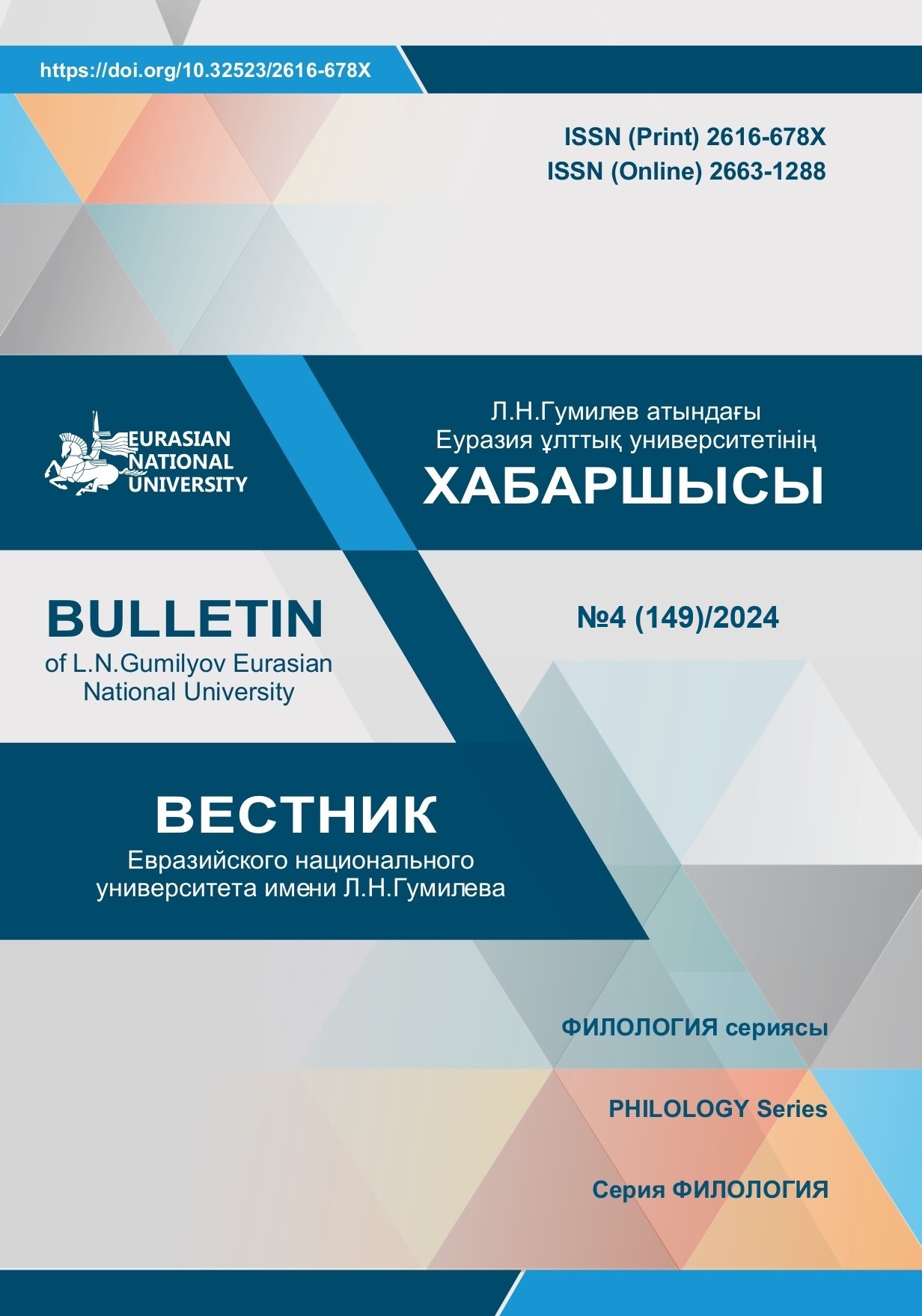
https://doi.org/10.32523/2616-678X-2024-149-4-31-44Keywords:
anthroponym, ethnonym, ethnoanthroponym, anthropoetnonym, social status, sociology, sociolinguisticsAbstract
The formation and development of Kazakh names occur on two bases. The first base is related to linguistic features, specifically linguistic patterns. Development in this direction includes the structural system and semantic field of personal names. The second base pertains to the functions of names within the social environment, including their role in regulating relationships between people and the official registration of citizens living in a particular society. Connection between citizens and their names is crucial from both linguistic and sociological perspectives, as any person is recognized as a member of society through their name and is acknowledged by their environment. A name serves as evidence of a person's existence and status as a full-fledged citizen of a specific country. Like other citizen rights, the right to a name is protected by law.
Just as society cannot exist without individuals, individuals cannot exist without names. Personal names often become associated with specific personalities; for example, “Abai” evokes the great Kazakh thinker rather than its original meaning, "smart, wise." This shift reflects the influence of social relations. Names unify and reflect national identity, making their sociological study essential. This article analyzes these aspects through an interdisciplinary lens.
Downloads
Published
How to Cite
Issue
Section
License
Here is the academic English version suitable for publication on the journal website:
The academic journal “Bulletin of L.N. Gumilyov Eurasian National University. Philology Series” adheres to an Open Access policy for all published materials, based on the principle of free and equitable dissemination of scholarly knowledge. The Editorial Board believes that open access to research results contributes to the advancement of philological science, strengthens academic communication, and promotes the integration of national research into the international scientific community.
1. Free and Open Access
All articles published in the journal are made openly available on the official website of the journal and are accessible to all users without restrictions, registration, or payment.
Users are entitled to:
-
freely read and download materials;
-
copy and distribute the texts of publications;
-
print articles;
-
use materials for scientific and educational purposes, provided that proper attribution is given to the author(s) and the original source of publication.
2. Licensing
Journal materials are distributed under the terms of the Creative Commons Attribution-NonCommercial 4.0 International (CC BY-NC 4.0) license:
https://creativecommons.org/licenses/by-nc/4.0/
This license permits the use, copying, distribution, and adaptation of the materials for non-commercial purposes, provided that appropriate credit is given to the author(s) and a link to the original publication is included.
3. Benefits of Open Access
The Open Access policy ensures:
-
increased visibility and citation of scholarly publications;
-
prompt dissemination of research findings in the fields of philology, linguistics, literary studies, and translation studies;
-
expansion of international academic cooperation;
-
access for readers to up-to-date scientific information without financial or technical barriers.
The Editorial Board is committed to ensuring transparency in editorial processes, maintaining high standards of peer review, and providing broad accessibility to research outcomes in the field of philological studies.
Funding data
-
Ministry of Education and Science of the Republic of Kazakhstan
Grant numbers AP23489736 «Қазақ есімдерін цифрлық платформа аясына жинақтау және жаңа технологияларға бейімдеу»