Lingual and Cultural Aspects of Translation of Metaphors in Financial and Economic Discourse
Views: 374 / PDF downloads: 158
DOI:
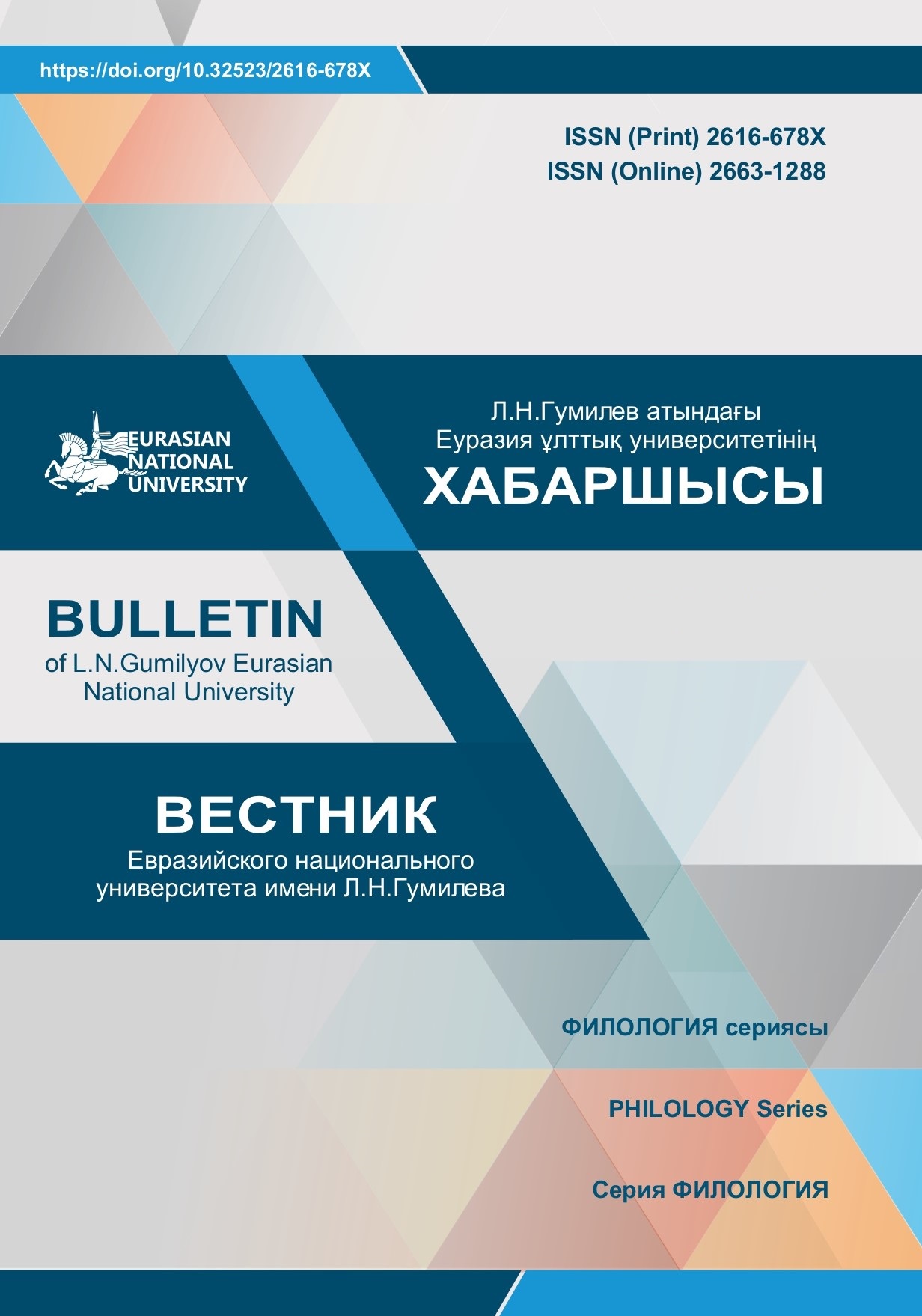
https://doi.org/10.32523/2616-678X-2018-124-3-157-168Keywords:
financial and economic discourse, business discourse, metalanguage, lexical strata, cognitive pattern, translation techniques, systemic nature, mirror reflectionAbstract
This article considers the issues relating to the metalanguage of financial and economic
discourse, particularly conceptual metaphors as part of financial and economic terminology. The article
deals with the metaphors under consideration at the intersection of language, culture and mode of thought
of representatives of the English community and it also places emphasis on the role of metaphors in
comprehending complex economic concepts.
As a practical example of functioning of conceptual metaphors within this discourse, a thorough
analysis has been conducted, taking into account various cultural and historic, sociocultural, lingual and
cultural and lingual and cognitive peculiarities of the target language.
This article provides possible options for how best to deal with translation of English financial
and economic metaphors into Russian. The analysis of metaphors in the language of economics allows the
target audience to broaden their horizons linguistically as well as cognitively.
Downloads
Published
How to Cite
Issue
Section
License
Here is the academic English version suitable for publication on the journal website:
The academic journal “Bulletin of L.N. Gumilyov Eurasian National University. Philology Series” adheres to an Open Access policy for all published materials, based on the principle of free and equitable dissemination of scholarly knowledge. The Editorial Board believes that open access to research results contributes to the advancement of philological science, strengthens academic communication, and promotes the integration of national research into the international scientific community.
1. Free and Open Access
All articles published in the journal are made openly available on the official website of the journal and are accessible to all users without restrictions, registration, or payment.
Users are entitled to:
-
freely read and download materials;
-
copy and distribute the texts of publications;
-
print articles;
-
use materials for scientific and educational purposes, provided that proper attribution is given to the author(s) and the original source of publication.
2. Licensing
Journal materials are distributed under the terms of the Creative Commons Attribution-NonCommercial 4.0 International (CC BY-NC 4.0) license:
https://creativecommons.org/licenses/by-nc/4.0/
This license permits the use, copying, distribution, and adaptation of the materials for non-commercial purposes, provided that appropriate credit is given to the author(s) and a link to the original publication is included.
3. Benefits of Open Access
The Open Access policy ensures:
-
increased visibility and citation of scholarly publications;
-
prompt dissemination of research findings in the fields of philology, linguistics, literary studies, and translation studies;
-
expansion of international academic cooperation;
-
access for readers to up-to-date scientific information without financial or technical barriers.
The Editorial Board is committed to ensuring transparency in editorial processes, maintaining high standards of peer review, and providing broad accessibility to research outcomes in the field of philological studies.