Abai's works are in the work of A.Baitursynuly «Adebiet tanytkysh»
Views: 373 / PDF downloads: 872
DOI:
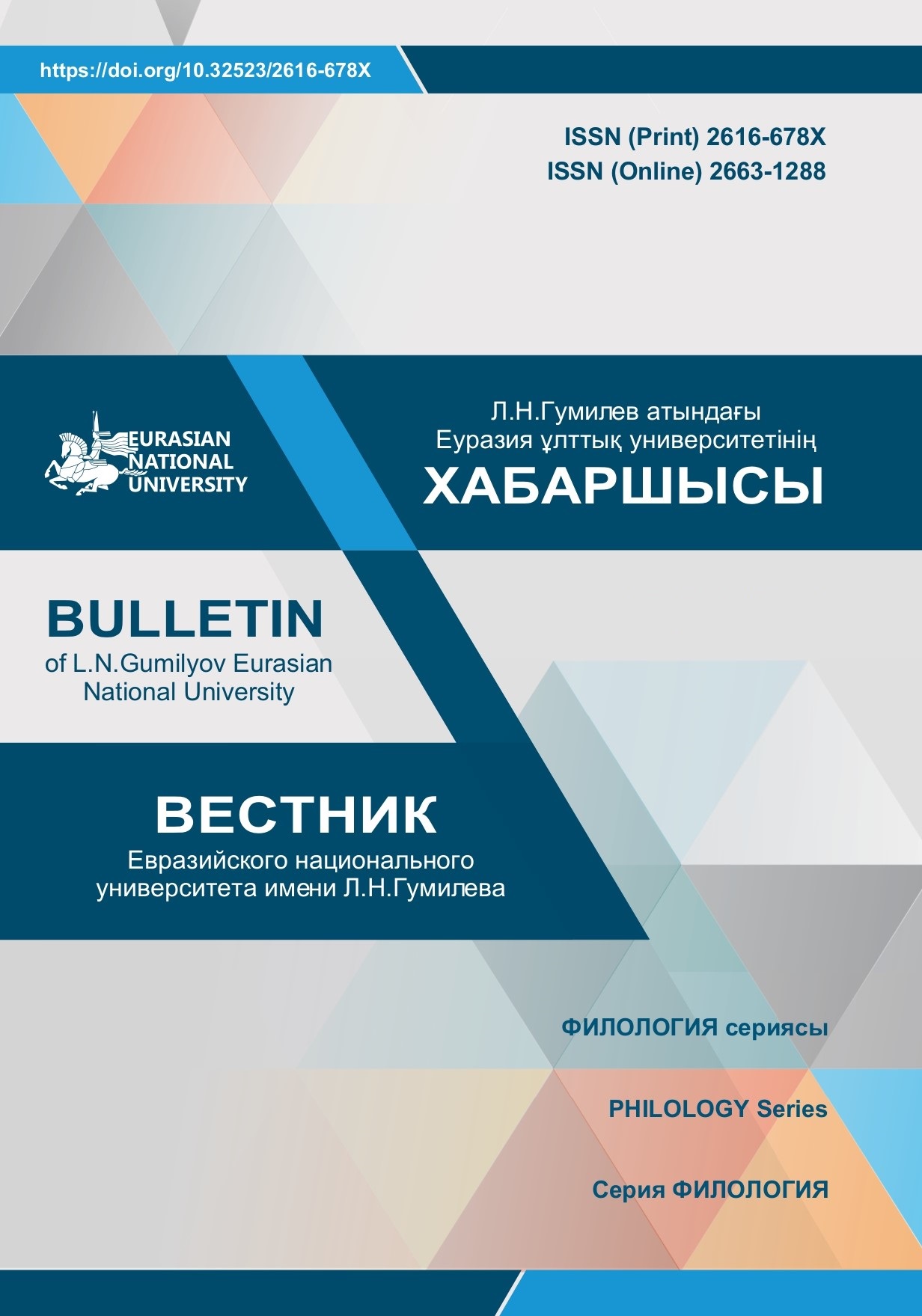
https://doi.org/10.32523/2616-678X-2022-138-1-155-163Keywords:
literary creativity, Abai studies, the Alash movement, the period of awakening, spiritual heritage, the work «Adebiet tanytkysh»Abstract
The article examines the influence of Abai's works on the spiritual and
cultural life of Kazakh society at the beginning of the twentieth century. The thematic and
ideological, artistic and aesthetic influence of Abai's poems on the work of the outstanding
scientist, educator, poet, spiritual leader of the national liberation movement Alash A. Baitursynuly
is analyzed. In the study of the scientist «Adebiet tanytkysh», the nature of borrowing Abai's poems
is analyzed and the position of A. Baitursynuly in their transmission is revealed. The number,
volume, content, and idea of examples from the poet's poems are determined. The study shows the
reasons for the presentation of cognitive information about Abai, examples of words of edification
are given. The reasons why Abai's personality and thoughts became the core of the Alash national
liberation movement are substantiated. In the works of the national intelligentsia, it was
formulated that the principles of wisdom of Abai acquired a special character in the cultural life of
the Kazakh people at the beginning of the twentieth century, that the deeply philosophical,
humanistic, social attitude of the thinker to unity became the spiritual basis of the Alash movement.
Downloads
Published
How to Cite
Issue
Section
License
Here is the academic English version suitable for publication on the journal website:
The academic journal “Bulletin of L.N. Gumilyov Eurasian National University. Philology Series” adheres to an Open Access policy for all published materials, based on the principle of free and equitable dissemination of scholarly knowledge. The Editorial Board believes that open access to research results contributes to the advancement of philological science, strengthens academic communication, and promotes the integration of national research into the international scientific community.
1. Free and Open Access
All articles published in the journal are made openly available on the official website of the journal and are accessible to all users without restrictions, registration, or payment.
Users are entitled to:
-
freely read and download materials;
-
copy and distribute the texts of publications;
-
print articles;
-
use materials for scientific and educational purposes, provided that proper attribution is given to the author(s) and the original source of publication.
2. Licensing
Journal materials are distributed under the terms of the Creative Commons Attribution-NonCommercial 4.0 International (CC BY-NC 4.0) license:
https://creativecommons.org/licenses/by-nc/4.0/
This license permits the use, copying, distribution, and adaptation of the materials for non-commercial purposes, provided that appropriate credit is given to the author(s) and a link to the original publication is included.
3. Benefits of Open Access
The Open Access policy ensures:
-
increased visibility and citation of scholarly publications;
-
prompt dissemination of research findings in the fields of philology, linguistics, literary studies, and translation studies;
-
expansion of international academic cooperation;
-
access for readers to up-to-date scientific information without financial or technical barriers.
The Editorial Board is committed to ensuring transparency in editorial processes, maintaining high standards of peer review, and providing broad accessibility to research outcomes in the field of philological studies.